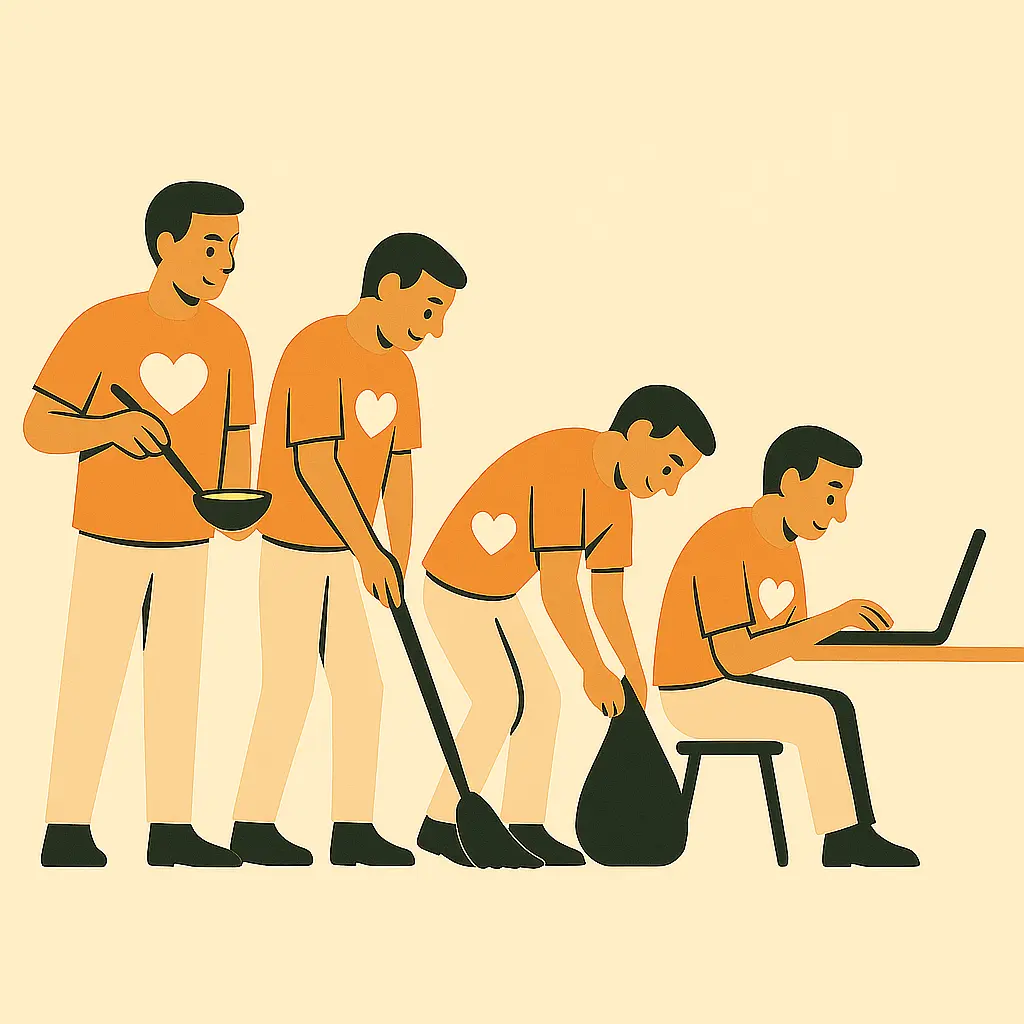
In the years since COVID-19, the volunteer landscape in the United States has been quietly transformed. Nonprofits say the same thing again and again: we have more people in need – and fewer people to help run our programs. That’s partly true. But it’s also incomplete.
According to AmeriCorps’ Volunteering and Civic Life in America report, about 28–29 percent of U.S. adults volunteered through an organization in 2022–23, compared with roughly 30 percent before the pandemic. In some states – Indiana, Utah, and Minnesota among them – rates remain higher, hovering above 30 percent. But the overall decline is real. What’s changing, though, is where and how Americans volunteer.
While formal volunteering hasn’t fully rebounded, informal help and micro-volunteering have surged. More than 13 million Americans volunteered virtually or in hybrid formats during the last cycle – tutoring online, managing social-media pages, helping nonprofits analyze data or translate materials. In other words, volunteering hasn’t disappeared; it’s simply moved off-site.
That shift has prompted the Points of Light Foundation to rethink the very definition of service. In 2025, the network announced a $100 million initiative to double the number of U.S. volunteers to 150 million by 2035, with a heavy emphasis on youth engagement and flexible formats. Their rationale is clear: people are more willing to help neighbors, join ad-hoc drives, or offer quick digital support than to fill out multi-page sign-up forms. The future, they argue, lies in shorter, easier, tech-enabled acts of participation.
Even as the number of formal volunteers fluctuates, their value keeps climbing. The nonprofit coalition Independent Sector estimates the national value of a volunteer hour at $34.79 in 2024, up nearly 4 percent from the previous year – and projected to rise again in 2025. When multiplied across an estimated 75 million volunteers contributing roughly 4.9 billion hours, that equals more than $170 billion in economic value – greater than the GDP of many countries.
For nonprofits, that means fewer volunteers can still represent more impact – but only if their time is properly captured and counted. The problem is that most organizations still track only traditional, on-site service hours and overlook a growing share of digital and “micro” contributions:
short remote tasks (translation, design, proofreading, research);
skills-based or professional volunteering done via online platforms;
corporate “micro-challenges” where staff complete tasks and trigger company donations.
The result is misleading: reports show fewer volunteers, but the true pool of contributors is larger and more diversified than ever.
Corporate trends reinforce this. Recent reports from Benevity and VolunteerMatch suggest a shift: employee volunteering is becoming more skills-based and measurable, even as traditional in-person participation stabilizes. Companies prefer activities that fit inside a lunch break, can be logged digitally, and yield a clean data trail for CSR reports. Volunteering, in other words, is becoming a productized experience – packaged, brief, and easy to verify.
That has real implications. A nonprofit without clear, time-bound volunteer roles or a digital sign-up flow may simply be scrolled past. In 2025, volunteer engagement competes with the UX expectations of apps, not bulletin boards.
If participation is changing rather than collapsing, why do so many nonprofits still feel understaffed?
First, the formats don’t match. Volunteers increasingly want flexible, short-term, or online options, while organizations still depend on fixed shifts and lengthy onboarding. AmeriCorps data show that civic discussion, community meetings, and other structured forms of participation remain below pre-COVID levels – people prefer quick, concrete tasks over standing committees.
Second, the metrics are outdated. Most organizations still plan around “number of volunteers per year” instead of “number of tasks completed.” In a world where one person can perform five micro-tasks in a week, the traditional headcount no longer measures capacity.
Third, corporate bridges are underused. Employee volunteering in 2025 is mediated through digital CSR platforms. To tap that flow, nonprofits must be able to describe a task in two sentences, guarantee it can be done within the stated time, and provide a verifiable outcome. Many can’t – and so the demand from companies exists, but the supply of “platform-ready” nonprofits remains thin.
Finally, younger volunteers are bypassing institutions entirely. According to Points of Light and other civic-engagement studies, many Gen Z and young millennial volunteers are organizing their own small-scale efforts — from mutual-aid drives and neighborhood fundraisers to online mentoring groups — often outside formal nonprofit structures. It’s not civic apathy; it’s disintermediation – participation without a middleman.
So what can nonprofits do to thrive in this new landscape?
1. Measure tasks, not people.
Shift planning and reporting from “we engaged 40 volunteers” to “we completed 120 tasks.” That approach captures short-form and remote contributions that traditional headcounts miss – and aligns with how digital platforms already track engagement.
2. Offer three entry levels.
Provide options for 10-minute, 2-hour, and monthly commitments. The fastest growth in 2024–25 came from flexible, bite-sized opportunities that are easy to start and complete.
3. Integrate with corporate systems.
Write volunteer opportunities in the format expected by CSR tools like Benevity or HandsOn Connect: clear objective, required skills, expected time, and measurable output. That’s where the audience – and funding potential – increasingly live.
4. Quantify and communicate value.
Include the dollar equivalent of volunteer time in reports and proposals. “Five online volunteers contributed the equivalent of $500 in professional services this quarter” makes invisible labor visible – and funders respond to that clarity.
5. Rethink belonging.
It’s now normal for one person to help several causes in parallel without “belonging” to any. Treat that fluidity as the new normal, not a loyalty failure. The goal isn’t ownership; it’s participation.
The lesson from 2025 is simple: volunteering hasn’t declined – it’s evolved. AmeriCorps and Points of Light data show not fatigue, but fragmentation. People still want to help; they just expect to do it in shorter bursts, on their own terms, often online, and sometimes without intermediaries.
The volunteer economy isn’t shrinking; it’s decentralizing. For nonprofits, that means two imperatives: make participation easy, and make contribution visible. If they do, they’ll find that the public’s appetite for service never went away – it simply changed its form.
Time, after all, has always been valuable. In 2025, it’s also the most flexible currency nonprofits can earn.