Americans showed up on December 2, 2025 – and not just with their credit cards. GivingTuesday 2025 set another record, with $4.0 billion donated and an estimated 38.1 million people participating across the United States, according to the GivingTuesday Data Commons. That's a 13% jump in dollars and 6% increase in participation compared to 2024. But the bigger story isn't the headline number – it's how people chose to give, and what that shift means for nonprofits trying to turn a single Tuesday into sustained support.
The $4 billion figure dominates news coverage, but dig into the GivingTuesday Data Commons breakdown and a more nuanced picture emerges. This year, 19.1 million people made financial contributions (up 3%), 13.5 million donated goods (up 4%), 11.1 million volunteered their time (up 20%), and 20.9 million spoke out publicly about causes they care about (up 26%). The fastest-growing categories weren't cash donations – they were volunteering and advocacy, two forms of participation that don't show up on a receipt but signal something important: people want to do something, not just write a check.
Woodrow Rosenbaum, Chief Data Officer for GivingTuesday, told the Associated Press that the surge reflects a deeper need for connection and belonging. "Generosity is a really powerful way to get that," he said. "When people see need, they want to do something about it – and GivingTuesday is an opportunity to do that in a moment of celebration as opposed to crisis."
For nonprofits, this is both an opportunity and a challenge. If your organization only measures success by dollars raised on December 2, you're missing the broader pool of people who engaged in other ways – and who might convert to financial supporters later if you meet them where they are.
Platform data from providers like Givebutter showed that 38% of gifts were under $50, and 60% were under $100. This mirrors trends from recent years: GivingTuesday remains an on-ramp for first-time, younger, and small-dollar donors. For organizations operating under fiscal sponsorship or running lean, that's both good news and a logistical reality check.
Good news: you don't need a handful of major donors to have a successful day. A broad base of $25 and $50 gifts can add up quickly if your messaging resonates. But here's the reality check: processing hundreds of small transactions means your payment infrastructure, donor receipting system, and support capacity all need to work smoothly. A $10 donation costs roughly the same in staff time to acknowledge as a $1,000 gift – and if your thank-you process breaks down, you've lost the chance to convert that first-time giver into a repeat supporter.
One LinkedIn post from a fundraising consultant put it bluntly: "Small organizations typically raise $5,000–$25,000 while major nonprofits raise millions in a single day... Many [smaller groups] raise a few hundred dollars. Some raise nothing at all." The post argued that for tiny teams, the week of prep required for GivingTuesday might not be worth the return – especially if it pulls focus from relationship-building calls and year-end outreach that convert better.
The takeaway? GivingTuesday isn't automatically a win for every organization. If you're a two-person operation, it may make more sense to pick up the phone and call your top 15 donors than to compete for viral attention against groups with marketing budgets and matching-gift sponsors. But if you do participate, make sure your back-office systems – payment processing, automated thank-you emails, donor database tagging – can handle volume without creating chaos.
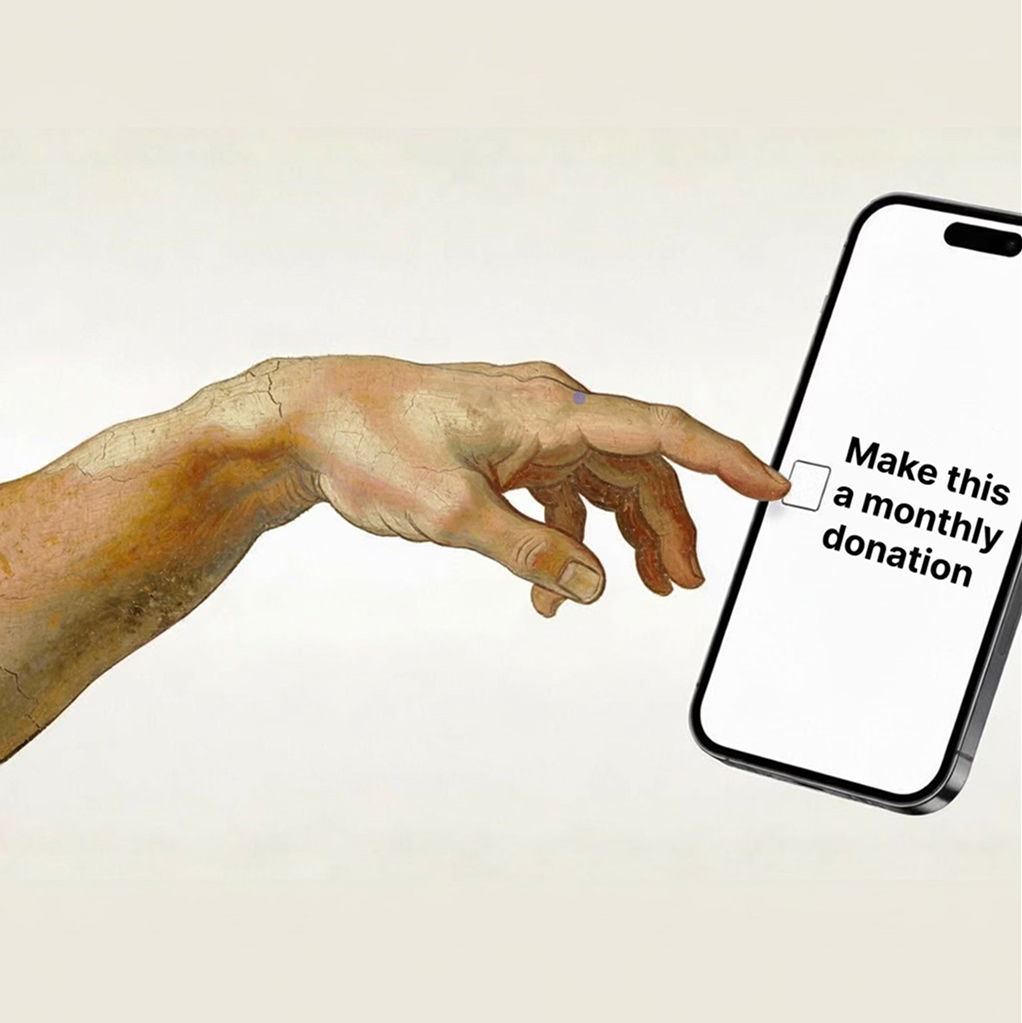
One of the most encouraging trends buried in the 2025 data: recurring giving is growing fast. GoFundMe Pro (which includes the fundraising platform Classy) reported a 25% increase in new recurring giving plans on GivingTuesday, while Bloomerang saw a 66% jump in recurring donations year-over-year. This matters because recurring donors are roughly 10 times more valuable over their lifetime than one-time givers.
For projects operating under fiscal sponsorship, the recurring-gift model solves one of the hardest problems: predictable cash flow. A $50/month donor contributes $600 over a year – more than most one-time GivingTuesday gifts – and that revenue can be budgeted, not scrambled for. The key is to make the ask at the right moment. GivingTuesday itself may not be the best time to pitch monthly giving (people are in "one big gesture" mode), but the 48 hours after are perfect. If someone gave $100 on Tuesday, follow up Thursday or Friday with a simple message: "Thank you for your gift. Would you consider turning that into $25/month to help us plan ahead?"
Blackbaud Institute and GivingTuesday released a report showing that 65% of 2024 GivingTuesday donors gave again in 2025 – compared to just 52% of donors who gave earlier in the year. That retention gap has held steady for five years. Translation: GivingTuesday donors are among the most loyal in your file if you steward them correctly. If you don't have a plan for January and February touchpoints, you're leaving money (and relationships) on the table.
Here's what the $4 billion headlines don't cover: the back-office scramble. Payment processors see spikes in transaction volume, which can trigger fraud alerts and delayed payouts. Credit card chargebacks and disputes tend to rise when impulse donors don't recognize a charge on their statement a week later. Donor support inboxes flood with questions about tax receipts, recurring vs. one-time gifts, and "I meant to give to a different organization" requests.
For fiscally sponsored projects, add another layer: donors sometimes misunderstand the legal structure. They see your project name in the campaign but receive a receipt from your fiscal sponsor (in Group 36's case, that's us). If your thank-you email doesn't clearly explain how fiscal sponsorship works – "Your gift is tax-deductible; you'll receive a receipt from Group 36, our 501(c)(3) fiscal sponsor, on behalf of [Project Name]" – you'll spend December answering confused emails instead of cultivating relationships.
A few practical tips for next year:
GivingTuesday has grown from a hashtag experiment in 2012 to a $22.5 billion cumulative movement. The 2025 results suggest that the day itself is maturing: growth rates are moderating (13% is healthy but not explosive), and the mix of participation is diversifying beyond cash donations. For nonprofits, that's a signal to think beyond December 2 and treat GivingTuesday as the start of a year-end giving season, not a finish line.
The organizations that will win in 2026 are the ones that:
One final number worth remembering: Bloomerang reported that nonprofits on its platform raised $76 million on GivingTuesday 2025 – about a third more than in 2024 – and saw an 82% increase in donations made via digital wallets (Apple Pay, Google Pay, etc.). That's a reminder that technology matters. If your donation form doesn't support one-click payment methods, you're losing conversions. For the wider picture of what the year taught the sector, see our seven most-read articles of 2025.